Loading...
April 2, 2026
Gas Stations in Iceland: Map, Prices & Travel Tips (2026 Guide)
Planning a road trip in Iceland? Understanding where and how to refuel is essential for a safe, stress-free journey. Whether you're driving the Ring Road, exploring the Westfjords, or venturing into the Highlands, knowing the locations of gas stations, fuel costs, and payment methods will help you avoid running out of petrol in remote areas.
This comprehensive guide covers everything you need to know about gas stations in Iceland, including current fuel prices, accepted payment methods, major fuel brands, and critical route-based fuelling strategies to keep your Iceland adventure running smoothly.
Where Can You Find Gas Stations in Iceland?
Gas stations are widely available along Iceland's Ring Road and in major towns, but become sparse in remote regions like the Highlands and Westfjords. Most stations are self-service and accept credit or debit cards with a PIN. Planning fuel stops in advance is essential for long drives through unpopulated areas, as distances between stations can exceed 62 miles (100 km) in rural regions.
How Do Gas Stations in Iceland Work?
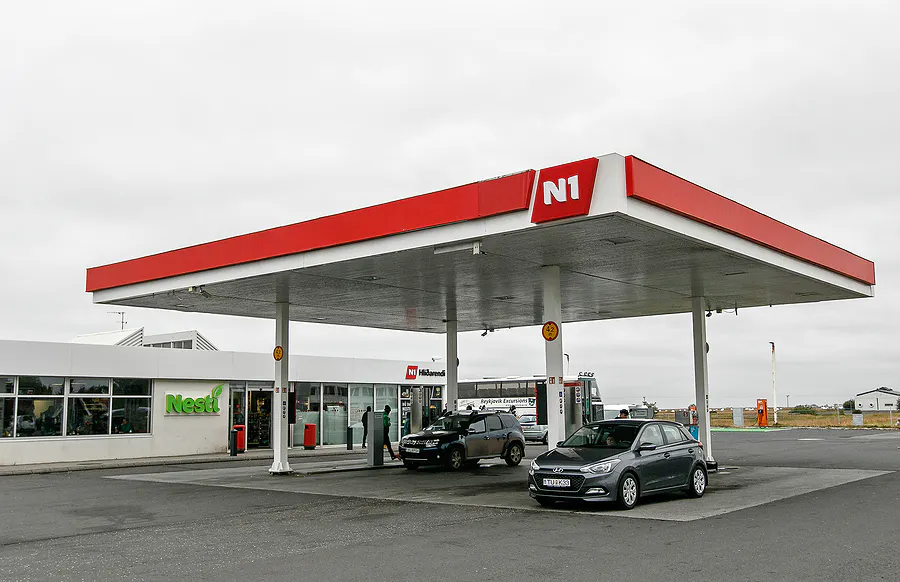
If you're renting a car in Iceland, one thing to be aware of is how and where to fuel up while on the road. On top of dispensing fuel, petrol stations here are a combination of coffee shops, restaurants, grocery stores, retail stores, and community centres. Unlike regular grocery stores and shops that operate on limited hours, gas stations are open for much longer, providing more services than you might expect!
Many gas stations in Iceland are self-service, though some locations offer full-service options where staff can fill your tank for you. For self-service pumps, you'll need a credit or debit card with a 4-digit PIN to authorise payment. International travelers should verify their cards are PIN-enabled before arriving, as contactless and signature-only cards typically won't work at automated pumps.
Self-Service vs Full-Service Stations
The majority of Iceland's fuel stations operate on a self-service model, particularly along the Ring Road and in rural areas. At these locations, you'll select your fuel grade, insert your card, fill your tank, and receive a printed receipt. Some stations in Reykjavík and larger towns offer full-service options during daytime hours, where attendants can assist with fuelling.
24/7 unmanned stations are common throughout Iceland, especially along major routes. These automated stations are lifesavers for late-night or early-morning travel, but require a functioning PIN-enabled payment card to operate.
Payment Methods at Iceland Gas Stations
Iceland is a largely cashless society, and this extends to fuel purchases. Self-service stations require a credit or debit card with a 4-digit PIN. Cards issued in the UK, EU, US, Canada, and Australia typically work fine, but you should contact your bank before travel to ensure your card is enabled for PIN transactions and international use.
Some fuel companies offer prepaid fuel cards that can be purchased at staffed stations or online. These cards are loaded with credit and work like any other payment card at the pump, making them a reliable backup if your primary card has issues. N1, for example, offers prepaid cards with PIN codes specifically designed for tourists.
Cash is rarely accepted at automated stations and is becoming increasingly uncommon even at staffed locations. Don't rely on cash as your primary payment method for fuel in Iceland.
Fuel Types Explained
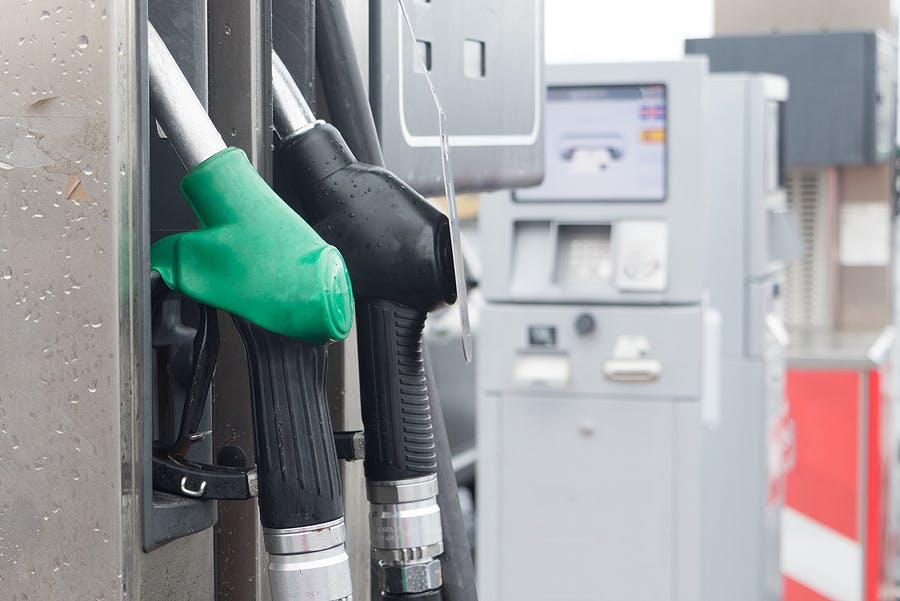
Your rental car in Iceland will be designed for a specific kind of fuel, so you need to be mindful of that when filling up your vehicle. Unlike the U.S., in Iceland, the petrol pump is green, and the diesel one is black.
Petrol (bensín in Icelandic) is the standard unleaded fuel for most cars. Diesel (dísel) is commonly used in 4x4 vehicles, campervans, and larger rental cars. Always verify your rental agreement to confirm which fuel type your vehicle requires, as using the wrong fuel can cause expensive engine damage.
Car Wash Facilities
Many gas stations in Iceland have car wash facilities, which can be especially useful if you have been driving on muddy roads. As with anywhere else, always wait for the driver ahead of you to finish before entering the car wash. In Iceland, it is also considered good etiquette to rinse down the area after use.
Gas Prices in Iceland (2026 Update)
Questions about gas prices in Iceland are among the most common that visitors to Iceland have. There is no hiding the fact that Iceland is an expensive country, so you'll want to save in areas where you can. By knowing what to expect and with a few simple techniques, you could save significantly on fuel costs on your trip.
As of March 2026, petrol (unleaded) costs approximately 210–225 ISK per litre ($1.70–$1.82 USD), while diesel runs slightly higher at 235–252 ISK per litre ($1.85–$2.04 USD). Prices fluctuate based on global oil markets, currency exchange rates, and regional location within Iceland.
Average Fuel Prices by Brand in Iceland
Fuel prices vary between suppliers, with budget chains like Orkan and Costco offering the lowest rates, whilst premium brands like Olís charge slightly more. Here's a current price comparison:
Orkan (ISK/L) - Petrol: ~215 (~$1.55) / Diesel: ~230 (~$1.66)
N1 (ISK/L) - Petrol: ~225 (~$1.62) / Diesel: ~240 (~$1.73)
Olís (ISK/L) - Petrol: ~220 (~$1.58) / Diesel: ~235 (~$1.69)
Costco Iceland (ISK/L) - ~200 (~$1.44) / Diesel: ~215 (~$1.55)
What Affects Gas Prices in Iceland
Iceland's gas prices are influenced by a combination of varied factors. An understanding of these can not only help you budget realistically for your self-drive itinerary but also give you a glimpse into how gas prices influence daily life in Iceland and its economy.
- Location – Within the island nation itself, prices tend to vary considerably, with remote regions costing more than easily accessible mainland cities such as Reykjavík.
- Economy – The Icelandic Króna (ISK) exchange rate against major currencies, especially the US dollar (USD), also affects domestic gas prices, which spike upwards when the Króna weakens against the dollar, thereby increasing import costs.
- Your vehicle – Based on the model and brand of the car, gas consumption can vary. Diesel cars, especially 4WDs, use more fuel than cars running on petrol, which tends to be cheaper.
- Driving routes – Road conditions vary across the country. You'll need less fuel for the neatly paved Golden Circle, compared to the rugged Highlands.
Map of Gas Stations in Iceland
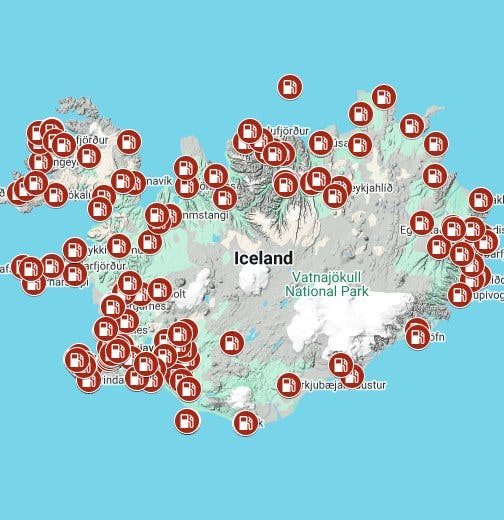
Visualising fuel station locations is essential for route planning, particularly for remote drives where stations can be 62+ miles (100+ km) apart. Iceland's Ring Road (Route 1) has relatively consistent fuel coverage, with stations every 30-50 miles (50–80 km) in most sections. However, the Highlands, Westfjords, and some coastal roads have far sparser coverage.
Find the locations of Iceland's gas stations on the Google Map below.
Where to Fuel in Iceland (By Route)
Different routes across Iceland have vastly different fuel station availability. Understanding which roads have frequent stations versus which require advance planning can prevent dangerous fuel shortages in remote areas.
Ring Road (Route 1)
The Ring Road offers the most consistent fuel coverage in Iceland, with stations typically spaced 31-50 miles (50–80 km) apart. Major towns along the route—Reykjavík, Akureyri, Egilsstaðir, Höfn, and Vík—all have multiple fuelling options. The longest stretch without fuel is between Höfn and Djúpivogur (roughly 62 miles/100 km), though this gap is manageable for most vehicles.
24/7 self-service stations are common along the Ring Road, making late-night or early-morning refuelling straightforward. Always refuel in towns before heading into remote sections, particularly along the south coast between Vík and Höfn.
Westfjords
The Westfjords have limited fuel infrastructure compared to the Ring Road. Stations are concentrated in larger towns like Ísafjörður, Patreksfjörður, and Hólmavík, with long stretches of empty road in between. The drive from Hólmavík to Ísafjörður (roughly 124 miles/200 km) crosses remote mountain passes with no fuel options en route.
Always fill your tank completely before leaving a town in the Westfjords, and carry extra fuel if attempting multi-day excursions into the region's more isolated peninsulas. Check station opening hours in advance, as many smaller locations aren't 24/7.
Highlands (F-Roads)
Iceland's Highland interior has almost no fuel stations. The few that exist—such as at Hrauneyjar and Landmannalaugar—operate only during summer months (June–September) and have limited hours. Highland crossings on F-roads like Kjölur (F35) and Sprengisandur (F26) can exceed 124 miles (200 km) without fuelling options.
Never enter the Highlands without a full tank, and consider carrying extra fuel in jerry cans for longer routes. Mobile coverage is also spotty, so mechanical or fuel issues can quickly become serious. Highland driving should only be attempted in suitable 4x4 vehicles with adequate preparation.
What Happens If You Run Out of Gas in Iceland?
Running out of fuel in Iceland's remote areas can be dangerous and expensive. Roadside assistance is available through your rental car company or services like FÍB (Iceland's automobile association), but response times in unpopulated regions can exceed 2–3 hours. Towing costs from remote locations easily reach 50,000–100,000 ISK ($350–$700 USD).
In winter, running out of fuel in sub-zero temperatures poses serious safety risks. Always keep your tank above ¼ full when driving outside Reykjavík, and never assume you can make it 'just a bit further' in remote areas. Fuel consumption increases significantly in cold weather, strong winds, and when driving on unpaved roads.
Major Gas Station Brands in Iceland
Knowing the location of the nearest petrol station is crucial when going on a road trip around Iceland. Getting familiar with the gas station brands helps, so we've covered the major ones below.
N1 Gas Stations
The N1 is a popular gas station chain with 95 locations dotted throughout Iceland, especially on the Ring Road. There are also stops in more remote regions such as the Westfjords.
Some N1 stations also offer oil changes, auto repair, and tire services. You can also get a prepaid card with a PIN here, which makes paying for fuel easy.
Costco Gas
For American travelers, it can be a comfort to know there's a Costco in Iceland. It's located in the town of Garðabær, which is a 15-minute drive from Keflavík airport. And your Costco membership is valid worldwide, which means you can seize those discounts wherever you are.
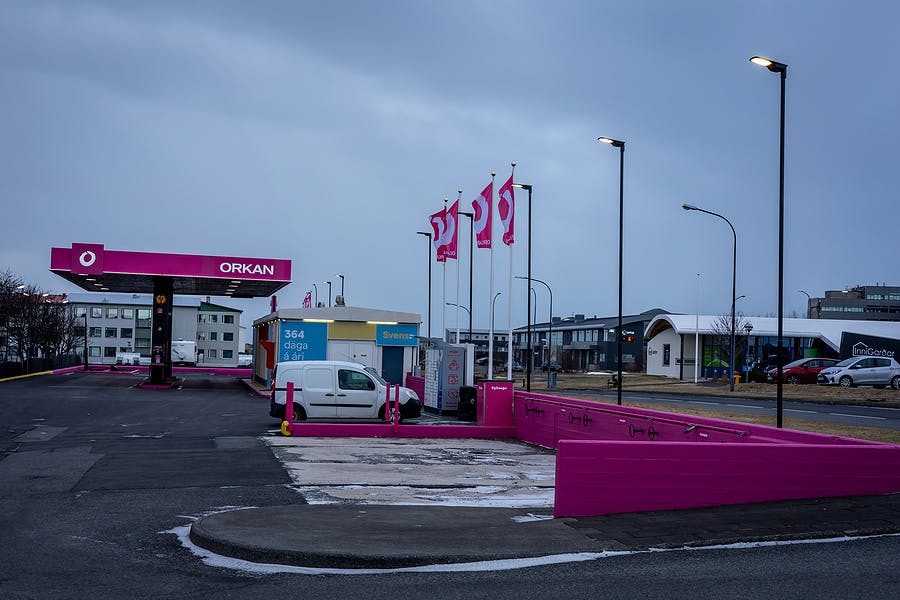
Orkan Gas Stations
Orkan is one of the cheapest gas station companies in the country. There are 65 self-service stations (mostly along the Ring Road), and they're open 24/7!
Olís Gas Stations
Olís has 50 stations in Iceland. The Olís Discount Card gives you 5 ISK off every litre of fuel, free WIFI, discount coffee, a 10% discount at their restaurants, and lots more offers.
EV Charging Stations in Iceland
With Iceland being a pioneer of sustainability, electric vehicle charging stations are found throughout the country, even in the more remote parts. There are two main electric car charger providers: Ísorka and ON (Orka náttúrunnar). You can recharge your car using the smartphone app with either provider. You can even download the English language apps before you arrive, so you're familiar with the process without needing to learn much of the local language.
Iceland's EV charging infrastructure is expanding rapidly, with fast-charging stations along the Ring Road and in major towns. Charging times vary depending on your vehicle and the charger type (standard vs fast charge). Budget extra time for charging stops compared to traditional refuelling, particularly in winter when battery efficiency decreases.
Tips for Saving Money on Gas in Iceland
Although you can't do much to change gas prices in Iceland, there are definitely ways to make the costs more manageable.
- Drive efficiently – Little things, such as maintaining a steady pace and not accelerating frequently, can go a long way in saving fuel. If you avoid speeding and keep under the limit of 50 km/hr in Iceland, you could save up to 25% in gas consumption.
- Choose the right vehicle – Camper rentals can vary based on fuel efficiency, so picking the right one is crucial. Although diesel itself is more expensive, diesel cars tend to be more efficient than gasoline ones.
- Self-service pumps – Self-service stations are generally cheaper as they don't have employees. You'll need to use a chip and PIN card to pay for gas, so make sure you have one if you're planning to use it on your trip.
- Find discounts – Companies sometimes offer discounts for popular attractions and activities. This could also include a gas chip that could save you up to 3 ISK/litre at certain gas stations.
Common Mistakes to Avoid
First-time visitors to Iceland often make preventable fuelling errors that can derail road trips. Here are the most common pitfalls and how to avoid them:
- Not having a PIN-enabled card – Many international cards work in Iceland, but self-service pumps require PIN authorisation. Contact your bank before travel to ensure your card is set up correctly.
- Driving into the Highlands without adequate fuel – Highland roads can exceed 124 miles (200 km) with zero fuelling options. Always start with a full tank and consider carrying extra fuel.
- Ignoring station spacing – Don't assume 'there will be another station soon' in rural Iceland. Check maps and plan fuel stops in advance.
- Using the wrong fuel type – Verify whether your rental car requires petrol or diesel before your first fill-up. Engine damage from misfuelling is expensive and not always covered by insurance.
Frequently Asked Questions About Gas Stations in Iceland
Are gas stations open 24 hours in Iceland?
Many gas stations along the Ring Road and in major towns operate 24/7 as unmanned self-service locations, particularly those operated by Orkan and N1. However, smaller stations in rural areas and the Westfjords may have limited hours or close overnight. Staffed services like car washes, shops, and food counters typically operate during daytime hours only (roughly 8 am–10 pm). Always check station hours if you're relying on specific services beyond basic fuelling.
How far apart are gas stations in Iceland?
On the Ring Road, gas stations are typically spaced 31–50 miles (50–80 km) apart, with the longest gap around 62 miles (100 km) between Höfn and Djúpivogur. In the Westfjords and Highlands, distances can exceed 93–124 miles (150–200 km) between stations. Remote F-roads in the Highland interior may have no fuel options for 124+ miles (200+ km). As a rule, never let your fuel tank drop below ¼ full when driving outside Reykjavík, and always refuel in towns before entering remote regions.
Can you pay cash for gas in Iceland?
Cash is rarely accepted at gas stations in Iceland, particularly at 24/7 self-service locations, which require credit or debit cards with a 4-digit PIN. Even staffed stations increasingly prefer card payments. If your card doesn't work at the pump, prepaid fuel cards with PIN codes can be purchased at major fuel companies like N1, Orkan, and Olís. International travellers should contact their bank before arrival to ensure their card is PIN-enabled for chip-and-PIN transactions.
Is fuel expensive in Iceland?
Yes, fuel prices in Iceland remain significantly higher than in the US or UK. As of April 2026, petrol costs approximately 200–225 ISK per litre (~$1.44–$1.62 USD), whilst diesel runs 215–240 ISK per litre (~$1.55–$1.73 USD).
How much should I budget for fuel on an Iceland road trip?
For a typical week-long road trip around Iceland, expect to spend around 20,000–35,000 ISK (~$144–$252 USD) on fuel depending on your vehicle and route, reflecting the recent tax cut that lowered prices across all brands.
What should I do if my card doesn't work at an Iceland gas station?
If your card is declined at a self-service pump, first verify it's a chip-and-PIN card enabled for international use. Contact your bank to ensure the card hasn't been blocked for fraud protection. As a backup, purchase a prepaid fuel card from a staffed N1, Orkan, or Olís station—these cards can be loaded with Icelandic króna and work at all self-service pumps operated by that company. Carry a second payment card as backup, and avoid relying on cash, which is rarely accepted at automated stations.
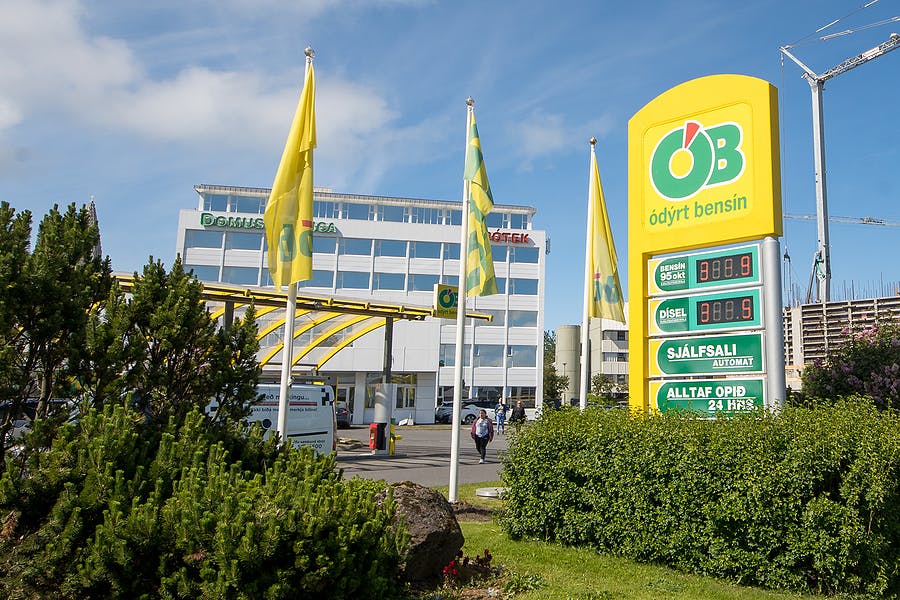
Whether you're stocking up on essentials at the grocery stores on-site or fuelling up for the next leg of your journey, gas stations in Iceland are convenient places for a range of things. Before you hit the road, make sure to check out our guide to driving in Iceland, so you're well-versed in the country's driving etiquette. Safe travels!
(*All prices are approx. as of March 2026)